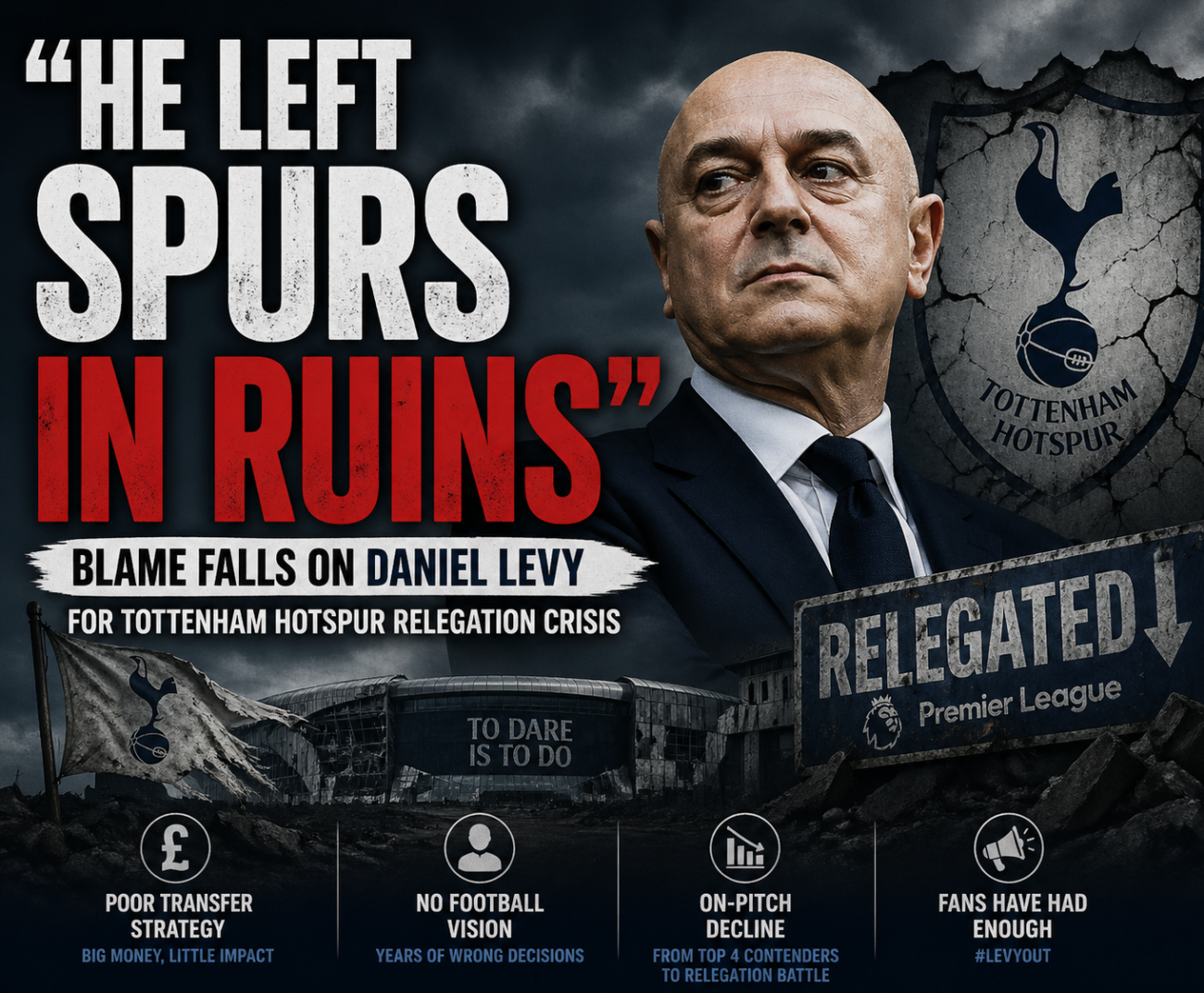
It’s too simple—and honestly a bit misleading—to pin Tottenham’s potential relegation entirely on the current squad or coaching staff. If you take a step back, a lot of this has been years in the making, and much of it traces back to decisions made under Daniel Levy.
From an insider’s perspective, the decline didn’t start this season—it started with a slow erosion of identity and direction. For years, Spurs operated without a clear footballing philosophy. Managers came and went with completely different styles, and recruitment never truly aligned with any long-term plan. That kind of instability eventually catches up with a club.
Levy deserves credit for turning Tottenham into a financially powerful institution, but football decisions increasingly felt reactive rather than strategic. Key moments—failing to properly rebuild after the Champions League final, inconsistent transfer windows, and holding onto underperforming structures for too long—left the squad unbalanced.
By the time he departed, Spurs weren’t a team—they were a collection of mismatched profiles. Some players suited possession football, others counter-attacking systems, and very few fit together cohesively. That’s not something a new manager like Roberto De Zerbi can fix overnight, especially in the middle of a relegation battle.
Even the injury crisis hitting the squad now exposes deeper issues. Lack of depth, overreliance on certain players, and questionable squad planning have all played a role. These aren’t short-term problems—they’re structural.
So while it might feel harsh, there’s a strong argument that the foundations for this relegation fight were laid long before this season kicked off. Levy didn’t just leave a challenging situation—he left a fractured football project.
That said, blaming one individual entirely ignores the shared responsibility across recruitment, coaching, and player performance. But if you’re asking where the roots of this crisis lie, many inside the game would quietly point to years of drift at the top.
If you want, I can also flip this into a punchy opinion column or a viral-style rant.
