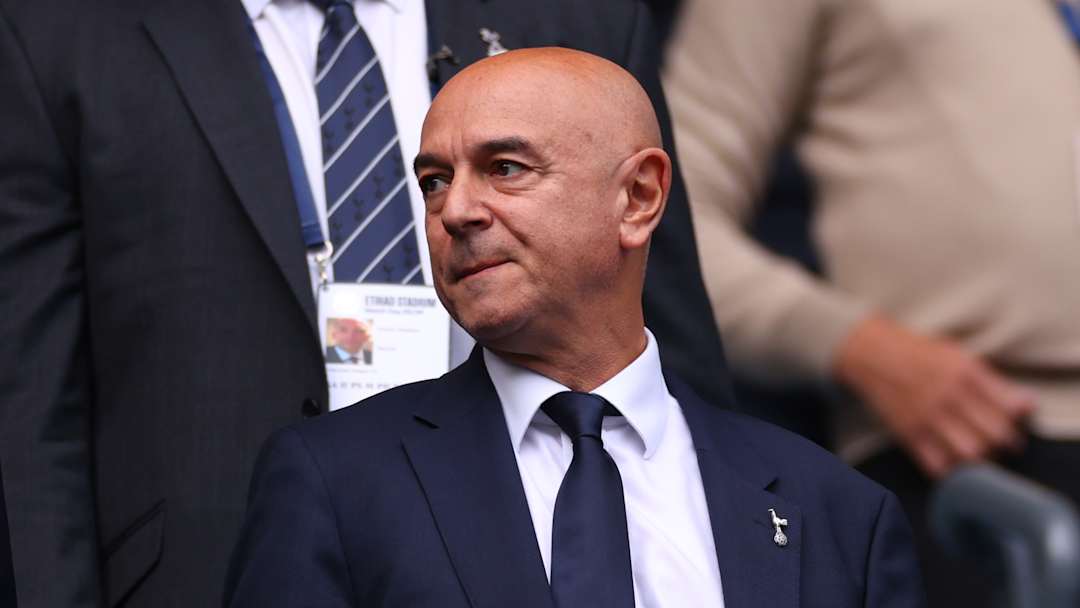
The legacy of Daniel Levy at Tottenham Hotspur is one of the most polarizing subjects in modern English football. While his departure shortly after the summer 2025 transfer window was met with cheers from a large section of the fanbase, the current state of the club suggests a harsh reality: things have actually gotten worse since he left the boardroom.
The irony is thick enough to cut with a knife. For years, supporters viewed Levy as the primary obstacle to glory, yet it now appears that he was the only one with enough foresight to build a safety net for the disaster currently unfolding.
While his successors seem to have been caught off guard by the failure of the Thomas Frank experiment, Levy had already quietly prepared the club for the unthinkable prospect of life in the Championship.
Evidence of this foresight comes from one of the most trusted voices in football journalism, David Ornstein. According to his recent reports, the former chairman made sure that nearly every player contract at the club contained a specific financial safeguard.
If Tottenham were to suffer relegation, the vast majority of the squad would automatically see their salaries slashed by approximately 50 percent. In the high-stakes world of the Premier League, where wage bills often run into the hundreds of millions, such a clause is more than just a footnote; it is a vital shield against total financial collapse.
Levy understood that the riches of top-flight television deals could vanish in an instant, and he ensured the club would not be crushed by an unsustainable payroll in the second tier.
It is, of course, a bit of a double-edged sword. On one hand, it is deeply unsettling to realize that the man running the club for decades genuinely believed relegation was a realistic enough threat to warrant such extensive planning. It suggests he saw the cracks in the foundation long before the fans did.
On the other hand, being prepared for a storm is always better than being caught in the open without an umbrella. Considering that Spurs finished a dismal 17th in the Premier League last season, Levy’s pragmatism looks less like pessimism and more like essential crisis management.
Had the current leadership, including Johan Lange and Vinai Venkatesham, been left to handle these negotiations without those clauses already in place, the club might be staring down a financial black hole.
There is a small group of supporters who still defend the previous era under Ange Postecoglou, arguing that the 17th-place finish was simply a byproduct of the team focusing all their energy on their successful Europa League campaign.
They suggest the league form was a choice rather than a reflection of quality. However, the evidence on the pitch tells a much grimmer story. Under “Big Ange,” the team wasn’t just distracted; they were fundamentally broken in domestic competition.
They ranked 17th because they were genuinely one of the four worst teams in the country. The ongoing struggle this season has only confirmed that the rot was deep and structural, rather than a temporary lapse in concentration.
Currently, the club has placed its faith in Igor Tudor to perform a late-season rescue act. While there is still technically enough time to climb the table, the early signs are worrying. Recent losses to local rivals Arsenal and Fulham were not just defeats; they were performances that lacked the “fight” one expects in a survival scrap.
The only thing keeping the mood from turning into total panic is the fact that Spurs remain four points clear of West Ham United, who currently occupy the final relegation spot. It is a precarious cushion, and one that could disappear within a single week of bad results.
This is undoubtedly one of the darkest periods in the long history of Tottenham Hotspur. Even the glimmer of the Europa League trophy from last season has been overshadowed by the very real threat of falling out of the top flight for the first time in generations.
While it is fair to blame Levy for the years of stagnation and questionable recruitment that led to this point, it is equally fair to admit that he wasn’t a fool. He didn’t walk into a season with his eyes closed. He knew the risks, he saw the decline, and he made sure that if the ship did eventually sink, the club wouldn’t go bankrupt on the way down.
The current board is now learning the hard way that running a club requires more than just hope; it requires a contingency plan for the worst-case scenario.
