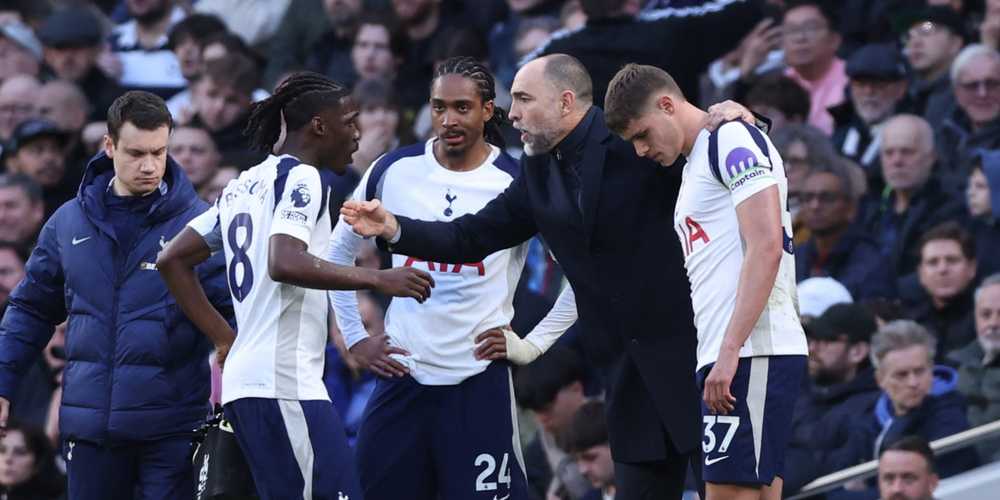
The arrival of Igor Tudor as the new steward of Tottenham Hotspur was supposed to act as a definitive turning point, a moment where the “hard-nosed” Croatian would purge the squad of its lingering lethargy and steer the club away from the unthinkable abyss of relegation.
For weeks, the supporters clung to a sense of cautious optimism, believing that the tactical rigidity of the former Juventus man would be the antidote to the chaotic, sinking ship left behind by Thomas Frank. However, the sobering reality of a North London derby defeat has shattered that illusion. It has become painfully clear that the problems at the Tottenham Hotspur Stadium are not merely skin-deep; they are structural, and they are personified by a midfield that has become remarkably sterile.
While the infamy of the Frank era will be debated for years, the true decline of this historic institution stems from a sustained period of dysfunctional recruitment. Nowhere is this more apparent than in the center of the pitch.
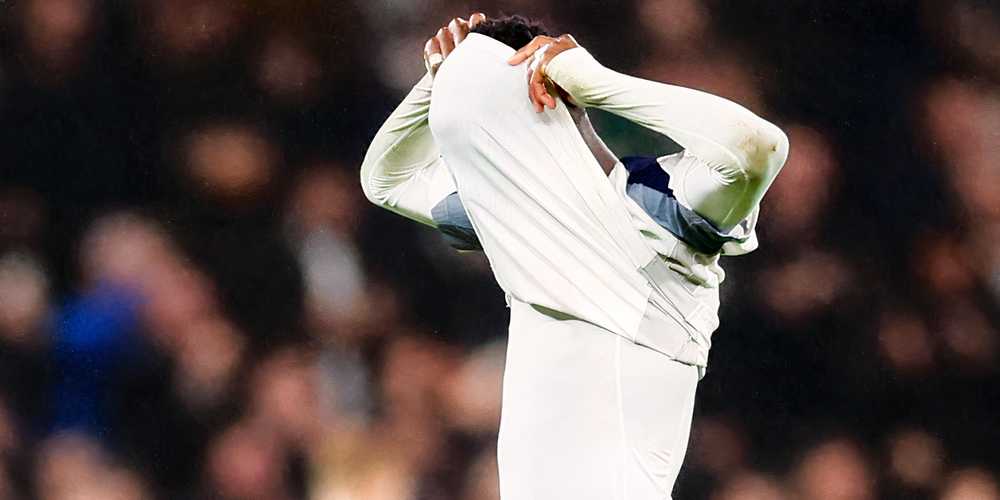
For a club that once prided itself on the artistic elegance of players like Christian Eriksen or the combative brilliance of Mousa Dembélé, the current options represent a startling fall from grace. The core of the team is currently hollow, lacking both the defensive grit to protect a fragile backline and the creative spark to ignite a misfiring attack.
The situation in the engine room is reaching a crisis point. This summer, Yves Bissouma is expected to depart as his contract expires, a move that few fans will mourn given his inconsistent and often lackluster contributions. Similarly, the long-term injury to Rodrigo Bentancur has robbed the team of its most technically proficient stabilizer.
Yet, even before his injury, analysts were beginning to point out that the Uruguayan was struggling to maintain the standards required of a “Big Six” midfielder. While Joao Palhinha remains an elite winner of duels, he is not a playmaker. He is a specialist who requires a fluent, progressive passer alongside him to function effectively—a partner that simply does not exist in the current squad.
This lack of creativity has resulted in some of the most anemic attacking statistics in the club’s Premier League history. Tottenham currently finds itself in the bottom five for Expected Goals (xG), a metric that measures the quality and probability of scoring chances.
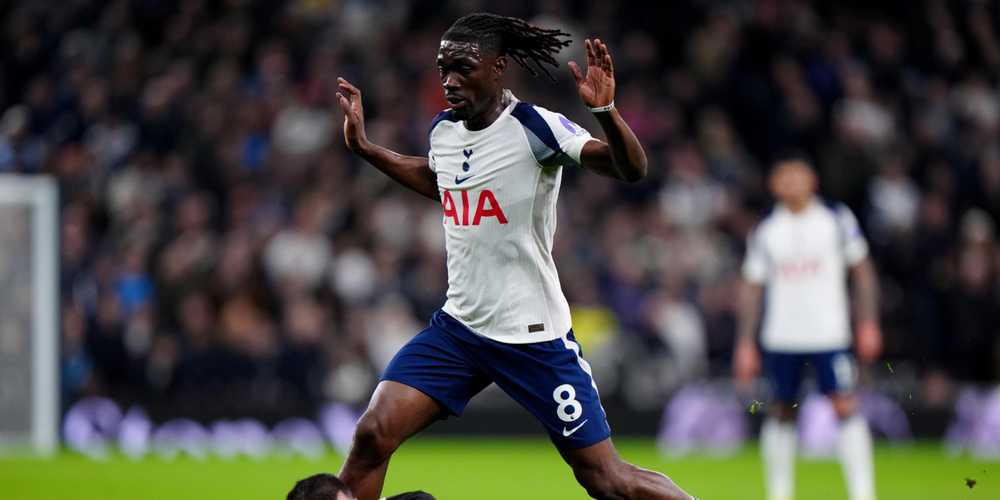
When a team’s xG sits alongside the likes of Burnley, Wolves, and Sunderland, it is a glaring indictment of the midfield’s inability to progress the ball into dangerous areas. The play has become sterile, predictable, and ultimately ineffective.
While it is easy to point the finger at departing veterans or the underperforming Conor Gallagher, there is a more frustrating case developing in the form of Pape Matar Sarr. At 23 years old, the Senegalese midfielder was once touted as a generational talent. Journalists and scouts frequently used words like “frightening” to describe his natural ability and physical profile.
He arrived with the pedigree of a prodigy, a £15 million investment that was supposed to yield a decade of dominance. Instead, Sarr has become a symbol of the club’s wider stagnation.
The statistics tell a story of worrying regression. While an 86% pass completion rate might look respectable on paper, it is a deceptive figure. Most of these passes are safe, lateral, or backwards, contributing nothing to the team’s offensive rhythm.
Sarr is currently creating a meager 0.3 chances per game and winning only 44% of his individual duels. For a player with his supposed “gas tank” and athletic frame, these numbers are unacceptable. He has become error-prone and appears to lack the tactical conviction needed to thrive under a demanding manager like Tudor.
Critics have noted that Sarr’s issues run deeper than just a mismatch with a specific coach’s instructions. His decision-making has been called into question, with many pointing out his failure to utilize intelligent movement to bypass Premier League presses.
There is a mounting fear among the Spurs faithful that Sarr is destined to become “Bissouma 2.0″—a player with immense potential who slowly fades into mediocrity due to a lack of application and a club environment that no longer fosters excellence. After the recent defeat to Arsenal, he looked like a “big problem” that tactical tweaks alone cannot solve.
The tragedy of the situation is that Sarr clearly possesses the raw ingredients to be a superstar. He has the rounded skill set and the physical durability to dominate the modern game. However, it is starting to look increasingly likely that he will only realize that potential elsewhere.
This realization makes a grim comment on the current state of Tottenham Hotspur. If the club has become a place where top talents go to stall rather than grow, the road back to relevance will be long and arduous.
As Tudor prepares for the final, frantic stretch of the season, he faces a monumental task. He must find a way to extract blood from a stone to get a tune out of a midfield that has forgotten how to play. If he cannot find a way to stabilize Sarr or discover a hidden creative spark within the squad, the perilous uncertainty of the Championship could become a very tangible reality.
The summer transfer window offers a glimmer of hope for a total rebuild, but for now, Tudor is forced to rely on a group of players who are currently operating far below the standard required for survival.
