
The arrival of Roberto De Zerbi at Tottenham Hotspur marks yet another chapter in a turbulent era for the North London club.
Fans and critics alike are wondering if the Italian tactician will be the one to finally steady a ship that has been drifting dangerously close to disaster. Over the next seven Premier League matches, we will get our answer. Spurs find themselves in one of the most critical periods in their modern history, and the stakes could not be higher. The club’s leadership, under the ENIC regime, has moved through a series of managerial changes at a dizzying pace.
After the high-octane but ultimately chaotic tenure of Ange Postecoglou, they sought the stability of Thomas Frank. When that didn’t work, they turned to Igor Tudor to act as a defensive firefighter. Now, De Zerbi has been brought in ahead of schedule to pick up the pieces of a team that, despite its struggles, managed to win the Europa League last season.
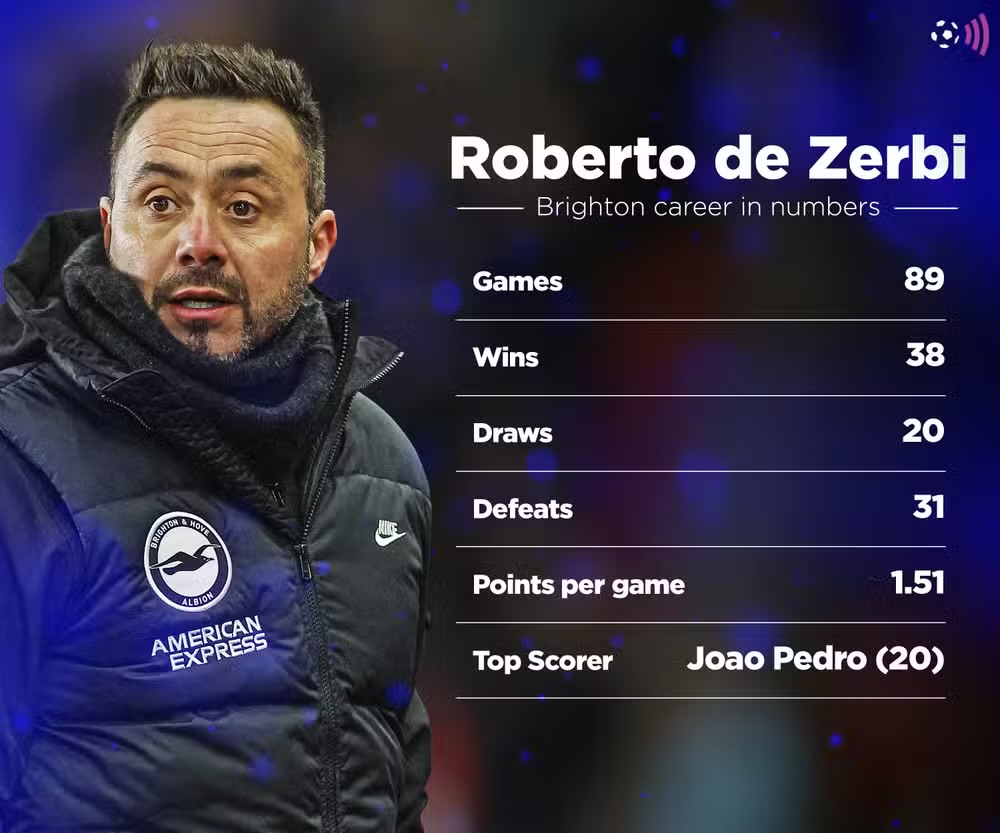
To understand what De Zerbi might do at Tottenham, we have to look back at his time with Brighton and Hove Albion. While his most recent stint was in France with Marseille, it was his work on the English south coast that truly defined his reputation as an elite coach. When he took over from Graham Potter in late 2022, he didn’t just maintain Brighton’s momentum; he accelerated it.
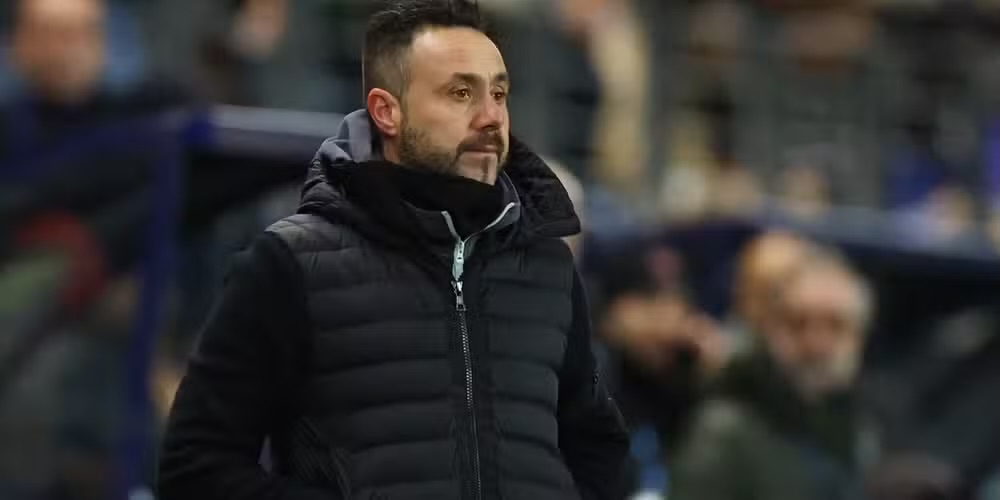
He led the Seagulls to a historic sixth-place finish and secured European football for the first time in the club’s history. His team was a joy to watch, scoring 72 goals in a single season—a tally only bettered by heavyweights like Manchester City, Arsenal, and Liverpool. However, that attacking flair came with a cost, as they also conceded 53 goals, which was the highest among the top seven teams.
De Zerbi is a coach who demands control. He wants his team to be the protagonist on the pitch, and for him, that starts and ends with having the ball. During his most successful year at Brighton, his team ranked second only to Manchester City in expected goals and third in average possession.
This reveals a clear tactical identity: a desire to dominate play through a patient, structured build-up from the back. He often talks about his philosophy in terms of his own playing days as a number ten. He believes that the creative players—the strikers and wingers—are the ones who win matches, but they can only do so if the team provides them with the ball in the right positions. This means the midfield must act as a precise engine room, constantly circulating the ball to wear down the opposition.
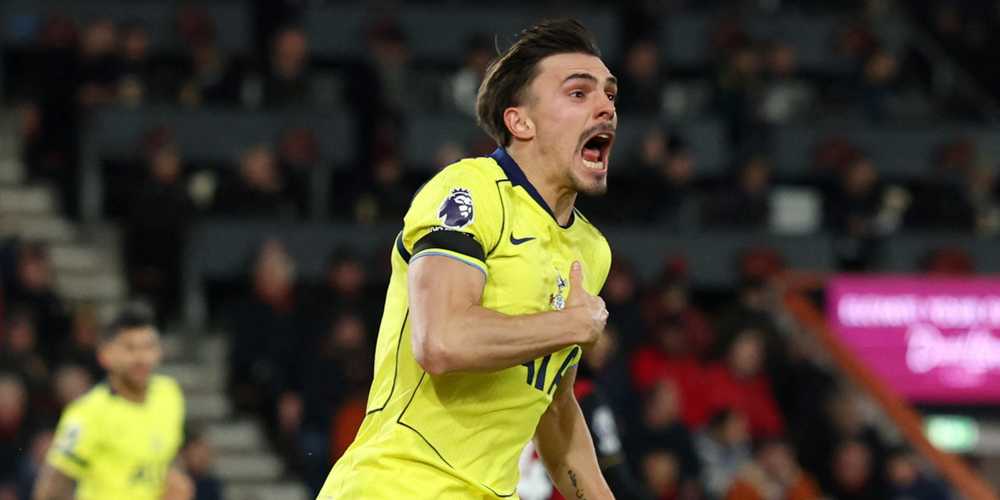
However, this specific demand for technical excellence puts several current Tottenham players in a difficult position. One player who should be particularly concerned about this managerial appointment is Joao Palhinha. The Portuguese international, currently on loan from Bayern Munich, arrived with a reputation as one of the best ball-winners in world football.
His statistics in that department are undeniable. He averages more tackles and interceptions per game than almost anyone else in the league. In many ways, his defensive work rate mirrors that of Moises Caicedo, who was a vital part of De Zerbi’s Brighton midfield before moving to Chelsea for a record fee.
The problem for Palhinha lies in what happens after he wins the ball. De Zerbi’s system doesn’t just require a “destroyer” who breaks up play; it requires a “metronome” who can pass the ball with unerring accuracy. At Brighton, Caicedo boasted a pass completion rate of nearly 90 percent. By contrast, Palhinha typically hovers around 80 percent.

While an 80 percent success rate is respectable for many systems, it is often not enough for a De Zerbi team that views a misplaced pass in the middle of the pitch as a cardinal sin. Furthermore, Palhinha is not known for his creative output from deep positions. He is a warrior and a physical presence, but he lacks the surgical passing range that De Zerbi used to find his attackers at Brighton.
This tactical mismatch creates a significant hurdle for Palhinha’s future in London. If a player does not fit the specific profile required by the manager, they often find themselves sidelined, regardless of their individual quality. For a player valued at £27m, sitting on the bench is not an option. Palhinha might feel understandably frustrated with the timing of this appointment. He is at a point in his career where he needs regular minutes to maintain his standing, and the shift toward a possession-heavy style could see him relegated to a backup role.
He might even find himself wishing for a coach with a different philosophy, perhaps someone like his former manager Marco Silva, who knew exactly how to utilize his unique strengths. The pressure on De Zerbi to hit the ground running is immense. History shows that his methods take time to implement. At Brighton, he failed to win any of his first five league games. If he suffers a similar slow start at Tottenham, the club could find itself in genuine danger of slipping further down the table.
The ENIC regime has gambled on De Zerbi’s ability to modernize the team’s playing style, but in doing so, they may have made some of their expensive recent acquisitions redundant. As the season enters its final stretch, the focus will be on whether the Italian can adapt his rigid principles to the squad he has inherited, or if he will force a transition that leaves established stars like Palhinha out in the cold. One thing is certain: the era of “firefighting” is over, and the era of the “protagonist” has begun.
Whether the current roster is ready for that change is a question that will determine the club’s path for years to come.
