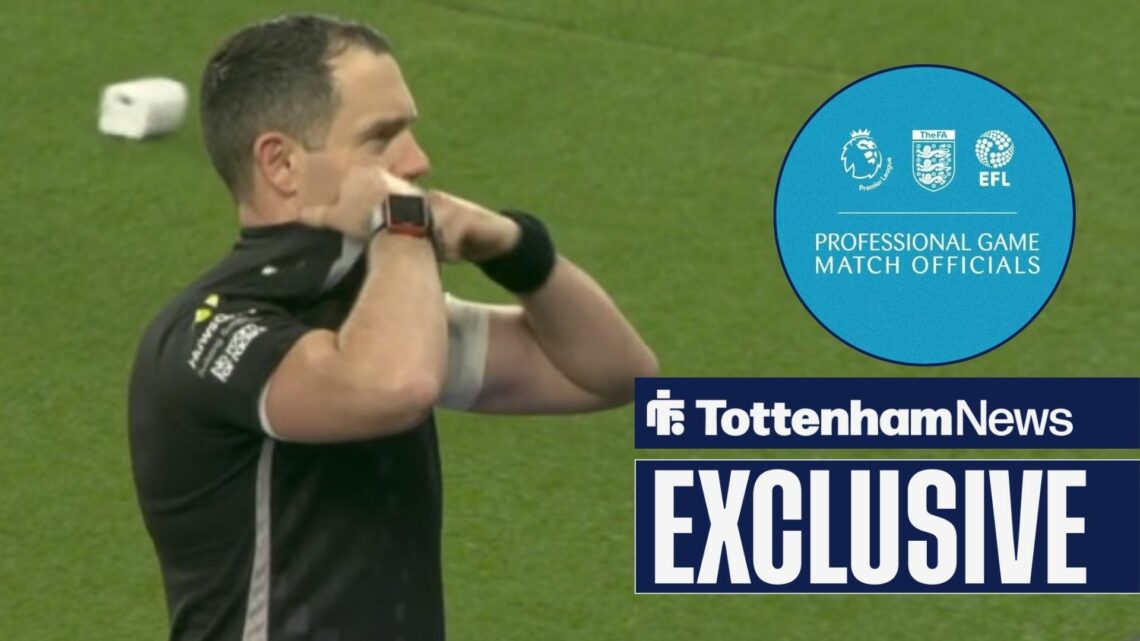
The North London derby is a fixture that rarely needs extra drama, yet the latest clash between Tottenham Hotspur and Arsenal was marred by a series of technical failures that have left the Professional Game Match Officials Limited (PGMOL) facing a wave of criticism.
While the action on the pitch saw Arsenal claim a decisive 4-1 victory, the narrative off the field has been dominated by “disgraceful” scenes involving the match officials’ communication equipment. These technical glitches caused significant delays and have sparked a heated debate about the basic competency and maintenance standards within the highest level of English officiating.
The match itself was a sobering experience for Tottenham fans. Under the guidance of Igor Tudor, the Lilywhites struggled to contain a clinical Arsenal side. Goals from Eberechi Eze and Viktor Gyokeres proved to be the difference, leaving the Spurs faithful frustrated with their team’s defensive frailties.
However, a different kind of annoyance permeated the stadium as the game was repeatedly put on hold. The first half was delayed just minutes before the scheduled kick-off, and the second half suffered from nearly identical issues.
These stoppages weren’t due to VAR controversy or crowd trouble, but rather a persistent failure in the communication system used by the referees and linesmen.
Former PGMOL chief Keith Hackett has been among the most vocal critics, expressing his utter disbelief at the repeated failures of a system he helped implement. For Hackett, the fact that the Premier League a multi-billion pound industry cannot ensure that its officials’ headsets work correctly is nothing short of an embarrassment.
He argued that the communication kit, if maintained and checked according to the protocols he established, should be essentially foolproof.
Hackett detailed the rigorous routine that officials are supposed to follow to prevent such fiascos. According to the former chief, every piece of equipment must be cleaned, dried, and stored properly after every match. Before a new game begins, fresh batteries must be installed.
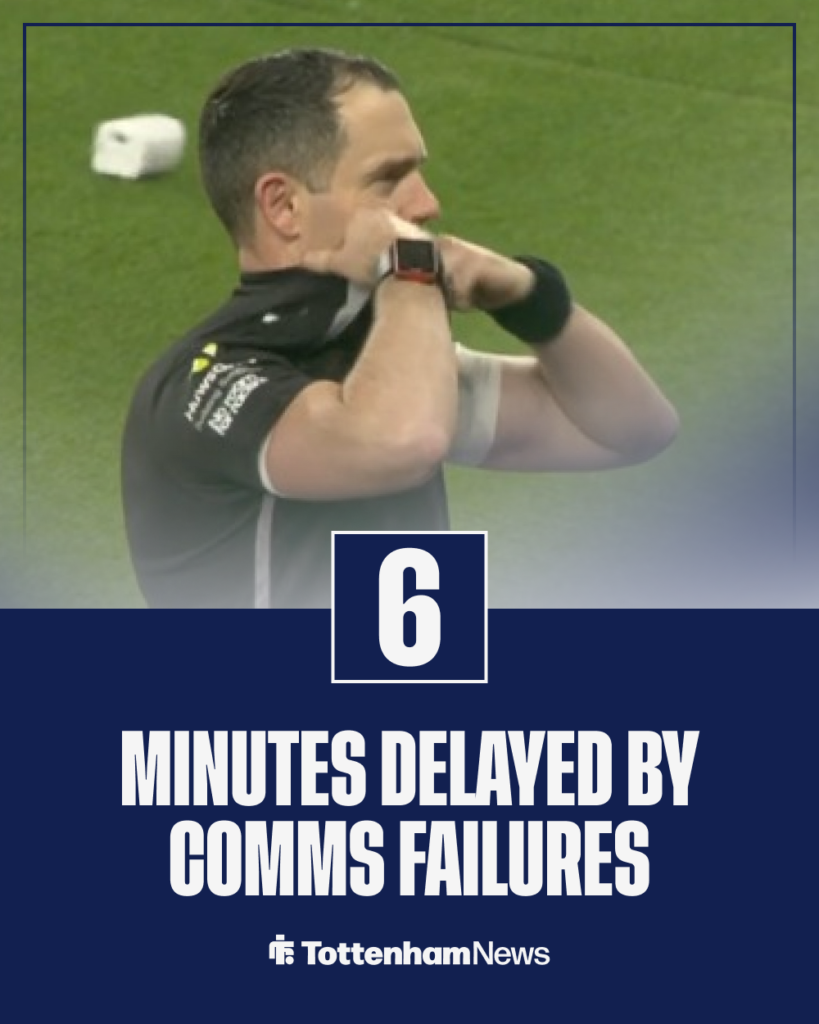
Most importantly, a comprehensive system check involving all four officials and the VAR hub at Stockley Park is mandatory seventy-five minutes before kick-off. Because these steps are so clearly defined, Hackett believes the PGMOL must provide a transparent explanation for why the system failed not once, but twice during the derby.
He characterized the situation as a “disgrace” and “unacceptable,” questioning whether the current leadership is neglecting the basic operational maintenance required for top-flight football.
While technical failures were the primary source of anger for the observers, the behavior on the touchline added another layer of tension to the afternoon. Both Igor Tudor and Mikel Arteta were highly animated throughout the match, constantly prowling their technical areas and barking instructions.
When the technical delays occurred, both managers were visible in their irritation. However, a sense of perceived hypocrisy soon emerged regarding how the fourth official, Sam Barrott, handled the two coaches.
Reports from the stadium suggested that Tudor was frequently reprimanded for stepping out of his designated technical area. Meanwhile, observers noted that Arteta appeared to be committing the same infractions on the opposite side of the pitch without receiving the same level of scrutiny or warning.
This perceived “preferential treatment” has only added to the scrutiny facing the PGMOL. In a match already struggling with technical legitimacy, the suggestion of inconsistent officiating standards toward the managers further damaged the day’s reputation.
The actual footballing controversy was relatively low compared to past derbies. Other than a disallowed goal from Randal Kolo Muani, the match was largely free of the usual VAR-induced rage that has become a staple of the modern game.
This makes the technical delays even more frustrating; the officials managed to get the big decisions mostly right, only to fail at the simple task of talking to one another through their headsets.
As the dust settles on another Arsenal victory, the pressure is mounting on the PGMOL to address these recurring technical glitches. In an era where every second of a broadcast is monetized and every delay impacts the flow and atmosphere of the game, “technical difficulties” are no longer an acceptable excuse.
Fans, managers, and former officials alike are demanding to know why a long-standing, simple system is suddenly prone to such high-profile failures.
For Tottenham, the defeat is a bitter pill to swallow, and the technical delays only served to prolong the misery of a heavy loss. For the PGMOL, the fallout from this match is likely to involve a deep dive into their pre-match protocols.
As Keith Hackett rightly pointed out, the integrity of the game relies not just on the decisions made by the referees, but on the professionalism and reliability of the tools they use to manage the match. Until the PGMOL can guarantee that their equipment works for ninety minutes, the shadow of “disgraceful” technical failures will continue to hang over the Premier League.
