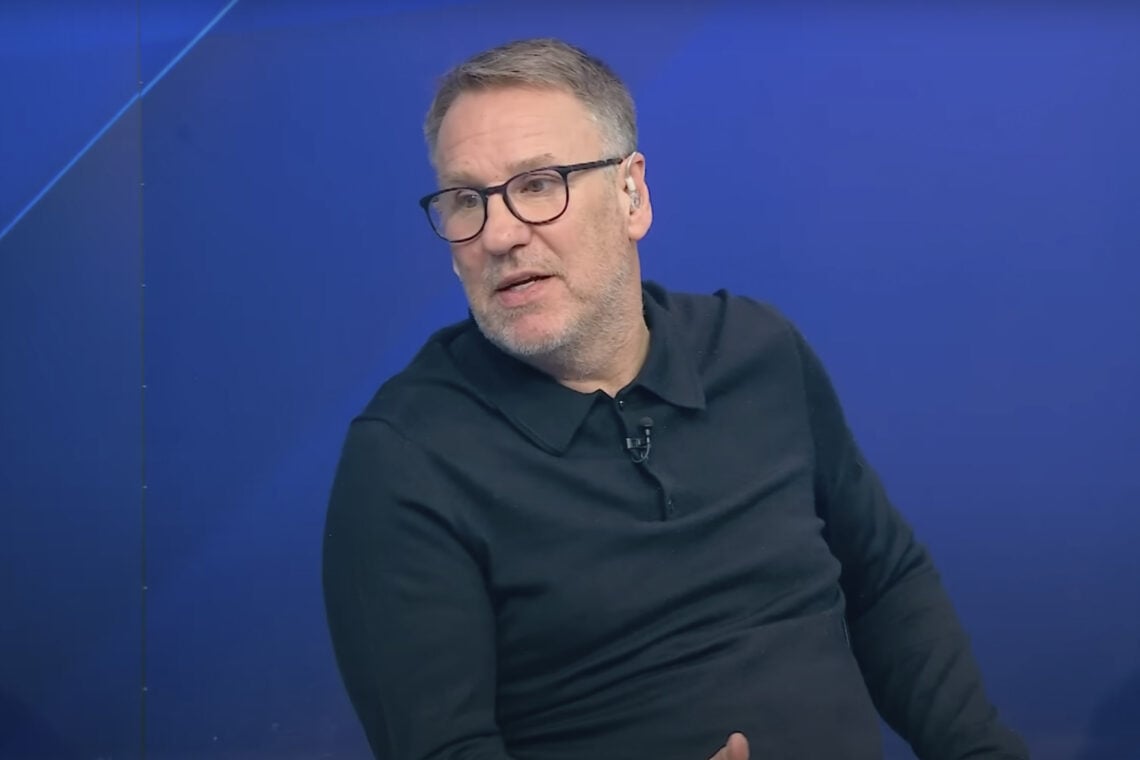
In the high-stakes world of football punditry, where opinions are often delivered with the subtlety of a sledgehammer, it is rare to see a prominent figure take a step back and admit they crossed a line. Paul Merson, the former Arsenal star and a staple of the Sky Sports Soccer Saturday panel, has recently done exactly that.
Known for his unfiltered and sometimes eccentric take on the game, Merson has revealed that he reached out to two current England internationals to personally apologize for comments he described as “out of order.” This rare display of humility offers a fascinating glimpse into the relationship between the media and the modern player, proving that even the most seasoned critics can be haunted by a sense of guilt.
Merson has never been one to shy away from a bold prediction or a harsh critique. He famously admitted to getting his initial assessment of Kevin De Bruyne’s move to Manchester City “horribly wrong,” but his latest admissions on The Overlap suggest that his concerns were less about being factually incorrect and more about the tone and persistence of his criticism.
Speaking alongside fellow pundits Gary Neville, Roy Keane, and Ian Wright, the 57-year-old opened up about the moments he felt he had let his professional standards slip, specifically regarding Harry Maguire and James Maddison.
The first instance involved Harry Maguire’s blockbuster £80 million move to Manchester United back in 2019. At the time, Merson was vocal in his belief that the fee was “ridiculous” for a player he felt lacked the necessary pace to defend high up the pitch.
While many analysts shared concerns about Maguire’s mobility, Merson admitted that he allowed his critique to become personal and repetitive. He confessed that he left the studio that day feeling a deep sense of unease, realizing that he had “gone on and on” to a point that felt unfair.
Merson took the extraordinary step of tracking down Maguire’s number and calling him to clear the air. During the conversation, Merson stood by his tactical analysis regarding the player’s speed but apologized for the relentless nature of the delivery.
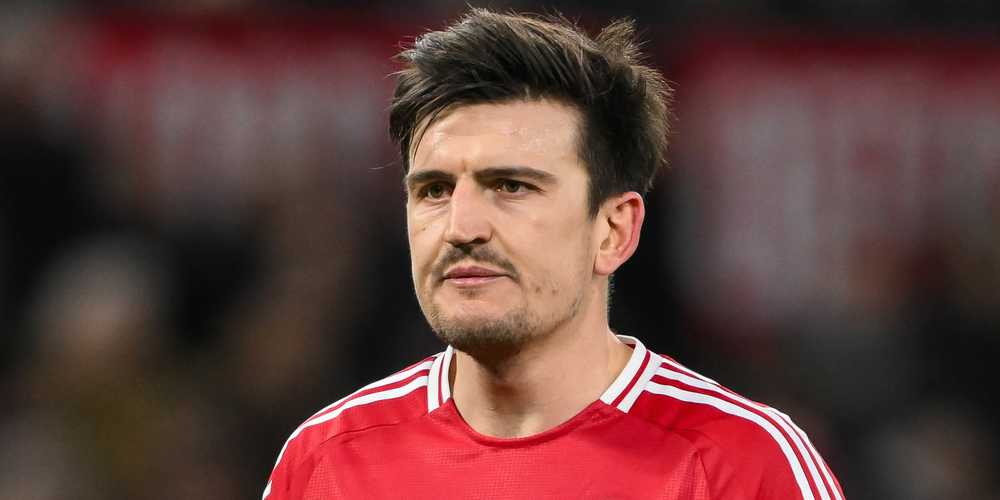
Maguire was reportedly surprised by the gesture, but the act of picking up the phone helped bridge a gap that usually stays wide open in the world of sports media. It was an acknowledgment that behind the “world’s most expensive defender” tag was a human being trying to find his feet in a high-pressure environment.
| Player | Subject of Criticism | Pundit’s Reflection |
| Harry Maguire | £80m transfer fee and defensive pace | “I went on and on… I was out of order.” |
| James Maddison | Impact as a ‘Number 10’ in a derby | “Why am I picking him out and not everyone else?” |
The second apology was directed toward Tottenham Hotspur’s James Maddison. This situation arose following a North London derby where Maddison’s performance was caught in Merson’s crosshairs.
Tottenham had struggled as a collective on the day, but Merson found himself focusing almost entirely on the attacking midfielder, arguing that a player in the “number 10” role must influence the game regardless of how poorly the rest of the team is playing.
Upon reflection, Merson questioned his own motives. He wondered why he had singled out Maddison when the entire squad had been, in his words, “atrocious.” Feeling that he had unfairly made Maddison a scapegoat for a team-wide failure, Merson once again decided to make a personal phone call.
Interestingly, the response from the Spurs star was one of blissful ignorance; Maddison told the pundit that he hadn’t even seen the original segment. This highlights a growing trend among modern players who actively avoid social media and television analysis to protect their mental focus, yet Merson felt it was important to offer the apology regardless.
Maddison is known for having a bit of a “spicy” relationship with pundits. He has previously aimed celebrations and social media posts at critics like Roy Keane, proving that he isn’t afraid to fight his corner.
However, Merson’s proactive approach seemed to diffuse any potential tension before it could start. It suggests that while players can handle tactical criticism, the feeling of being “picked on” or unfairly targeted is what truly causes friction.
This revelation from Merson is a reminder of the “human element” that is often lost in the 24-hour news cycle. Pundits are paid to be entertaining and provocative, but Merson’s story shows that there is a line between sharp analysis and personal “out of order” behavior.
By holding his hands up and making those calls, Merson has set a standard for accountability that is rarely seen in the industry.
For the fans, these stories add a layer of depth to the people they see on their screens every weekend. It shows that beneath the banter and the heated debates, there is a level of respect for the professionals on the pitch.
Whether you agree with Merson’s tactical views or not, his willingness to say “sorry” is a refreshing change of pace in a world where everyone is usually desperate to be right at all costs.
