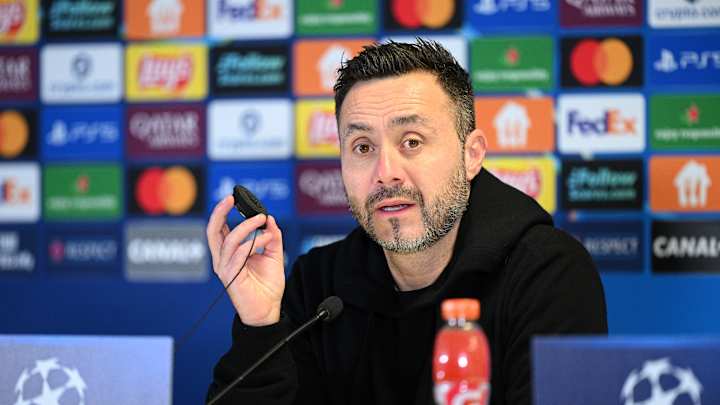
The decision to bring Roberto De Zerbi to Tottenham Hotspur represents one of the most significant gambles in the recent history of the North London club.
While the headlines often focus on the financial details of such high-profile appointments, the reality behind this deal involves much more than just a large paycheck. It appears that the club’s leadership, led by Vinai Venkatesham and Johan Lange, had to offer something far more valuable than money to secure the Italian’s signature.
They were convinced that De Zerbi was not only the right man to steer the team away from a frightening relegation battle in the short term but also the ideal architect to build a brand-new era for the club in the years to come.Initially, there were doubts about whether De Zerbi would even consider the role. Joining a team in the middle of a struggle against the drop is a massive risk for any manager’s reputation.
However, the Tottenham hierarchy was determined. They managed to persuade him to take the job immediately by offering a top-tier salary that reflects his status as one of Europe’s most tactically interesting coaches. Perhaps even more surprising is the reported commitment De Zerbi has made.
Usually, managers of his caliber demand a “get-out clause” in case the team is actually relegated to the Championship. In this instance, it seems the club stood their ground, and De Zerbi accepted the challenge without a safety net, agreeing to stay and fight even if the worst-case scenario occurs.While the financial package was certainly impressive, fresh reports suggest that money was not the main reason De Zerbi chose Tottenham over other potential suitors.
To truly understand why he agreed to take on this massive project, one has to look at the power dynamics within the club. According to reputable sources in Italy, including reports from La Gazzetta dello Sport, Tottenham has offered De Zerbi a level of authority that is rarely seen in the modern game. Rather than being a simple head coach who focuses only on training the players, he is set to become a central figure in almost every major decision the club makes.
This shift in strategy is a massive departure from how Tottenham has operated in the past. For years, the club has tried to follow a more traditional European model, where a sporting director handles the long-term planning and transfers while the manager focuses on the pitch. However, under this new agreement, De Zerbi will reportedly have a say that mirrors the legendary control once held by managers like Sir Alex Ferguson or Arsène Wenger.
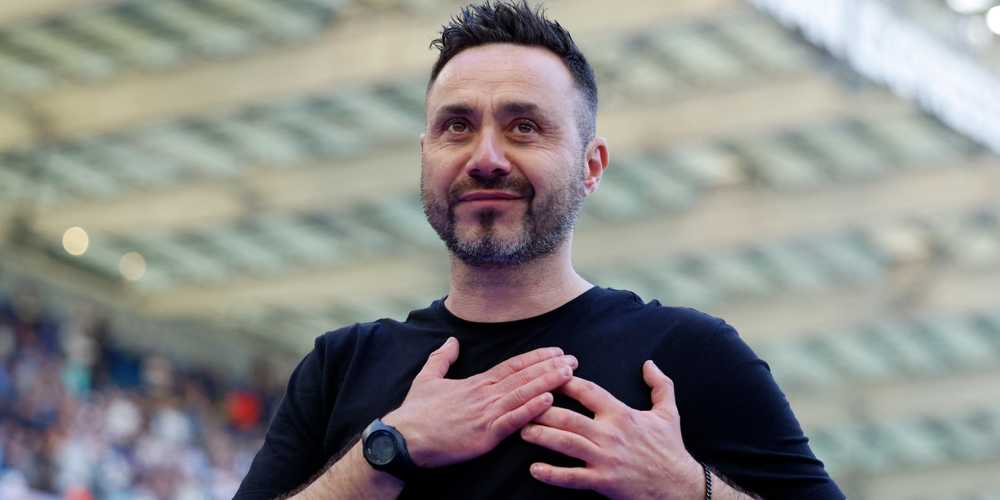
This means that when it comes to identifying new talent and deciding which players to buy or sell, the manager’s word will carry immense weight. If he identifies a specific player who fits his complex tactical system, the club has essentially promised to do everything in its power to bring that player to North London.This level of influence over transfer policy and general club operations is truly unprecedented for Tottenham, especially considering the long tenure of Daniel Levy.
In the past, even world-renowned managers with massive trophies to their names, such as Jose Mourinho and Antonio Conte, were never given this kind of total control. Conte, in particular, frequently expressed his frustration with the club’s recruitment process, often hinting that he felt like a passenger in the transfer market rather than the driver. For the club to suddenly pivot and grant such power to De Zerbi suggests a level of desperation or, perhaps, a radical realization that their previous methods were no longer working.
It seems that desperate times have led to truly desperate measures. Vinai Venkatesham and Johan Lange clearly felt that the threat of relegation was so real that they had to do whatever was necessary to land their top target. By handing over the keys to the kingdom to one man, they are betting the entire future of the club on De Zerbi’s vision. It is a move that has left many fans feeling uneasy.
While some supporters are excited by De Zerbi’s attractive style of play and his success at previous clubs like Brighton and Marseille, others are worried about the risks. Giving so much power to a single individual can be dangerous if things do not go according to plan immediately. Furthermore, the pressure on De Zerbi is now immense. He isn’t just arriving to coach a group of players; he is arriving to reshape an entire organization from the ground up.
He will be expected to fix the immediate defensive issues, implement his trademark possession-based style, and oversee a recruitment strategy that has been hit-or-miss for several seasons. If he succeeds, he will be hailed as a genius who saved the club from its darkest hour. If he fails, the decision to give him such total control will likely be looked back on as a turning point where the club lost its way.The coming months will be a fascinating test of this new partnership.
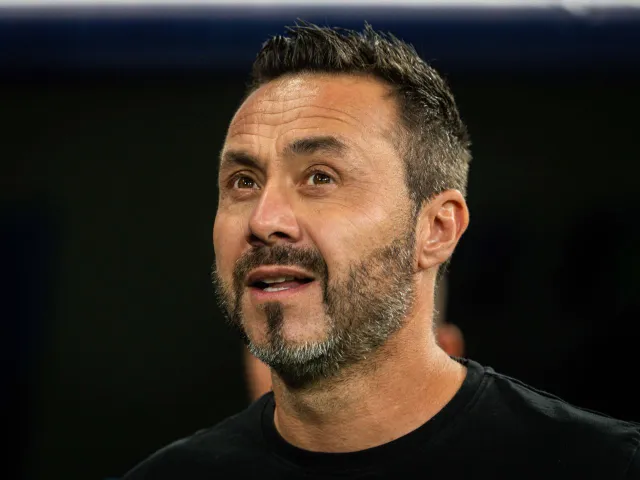
Tottenham fans are used to drama, but this specific situation—a fight against relegation combined with a total overhaul of the club’s power structure—is uncharted territory. Whether De Zerbi can live up to the “Sir Alex Ferguson” comparisons remains to be seen, but one thing is certain: he has been given every tool and every bit of authority he could possibly ask for. There are no more excuses for the leadership or the coaching staff.
The path forward is now entirely in the hands of the Italian manager, and the football world will be watching closely to see if this bold concession pays off or if it leads to further chaos.
