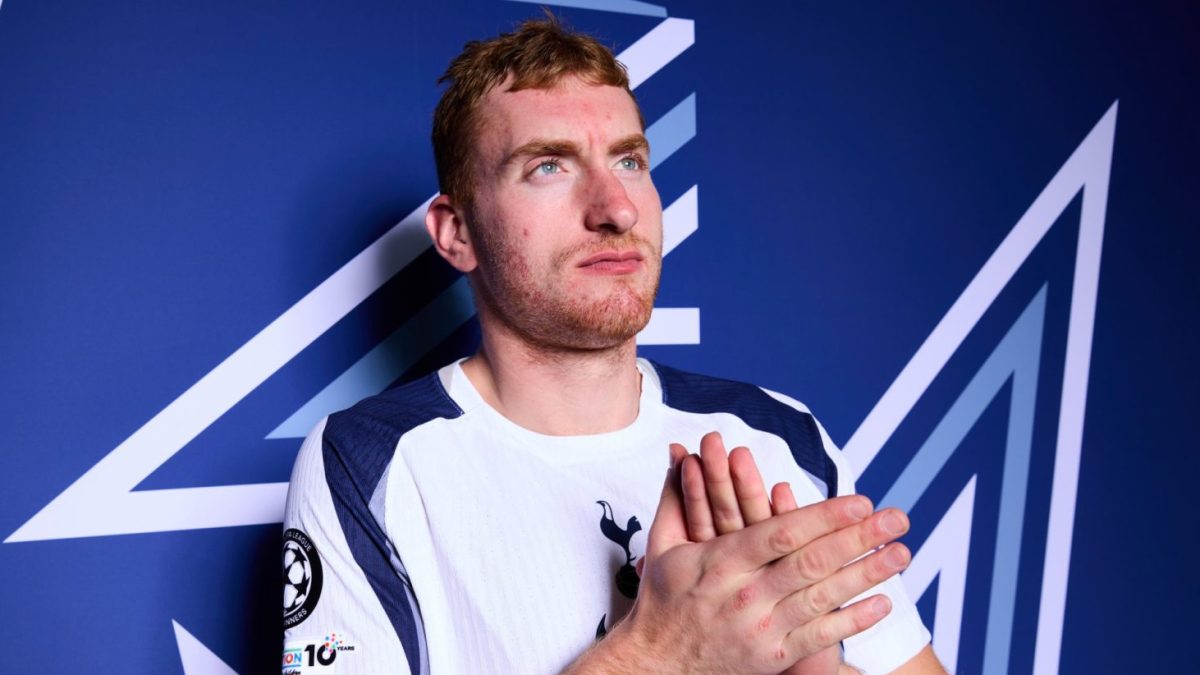
The story of Dejan Kulusevski over the last year has become one of the most confusing and frustrating mysteries in modern football.
It has been roughly ten months since the Swedish international last stepped onto a pitch for Tottenham Hotspur, and his absence has coincided with one of the most chaotic periods in the club’s recent history.
Since he last played on May 11, 2025, the team has experienced the ultimate highs and the most embarrassing lows. They managed to win the Europa League trophy, yet they also collapsed in the domestic league, finishing 17th and finding themselves dragged into a desperate battle to avoid relegation.
During this time, managers have come and gone, but the one constant has been the empty spot on the right wing where Kulusevski used to thrive.The most baffling part of this situation is how it started. When Kulusevski first missed a game, it wasn’t described as a season-ending disaster.
In fact, Ange Postecoglou, who was the manager at the time, dismissed it as a simple “knock.” The medical staff and the coaching team didn’t seem worried, and fans expected to see him back in the lineup within a week or two.
However, those weeks turned into months, and the “minor” issue spiraled into a medical saga that has seen the player flying back and forth between London and Barcelona for specialist rehabilitation.
The injury specifically involves his kneecap, or the patella. Knee injuries are notoriously difficult because so much depends on the specific tissue damaged. If a player hurts the cartilage, it requires a very different recovery path than if they damage the extensor mechanism, which is what allows the leg to straighten and generate power.
Earlier this March, Kulusevski underwent keyhole surgery to finally address the lingering problem. He remained optimistic after the procedure, mentioning that the surgeons “took out what wasn’t supposed to be there” and claiming his knee felt great. Yet, despite his personal optimism, the reality on the ground looks a bit different.
He was recently spotted limping while visiting his Swedish teammates ahead of a World Cup qualifier against Ukraine. While he wants to be back, his body still seems to be protesting.
It is almost impossible to exaggerate how much Tottenham has missed him. During the 2024-25 season, Kulusevski was the engine of the team’s attack. He was a constant threat, and his ability to hold the ball and deliver precise crosses made Spurs one of the most dangerous teams in the league from wide areas.
The statistics tell a grim story of the “Kulusevski-less” era. Before he got hurt, the team was creating a high volume of chances, with an expected goals (xG) rating of nearly 60 per season. Without him, that number has plummeted to just 32.5.
Their scoring rate has dropped significantly, and the team simply looks less creative and less confident whenever they enter the final third of the pitch.The timeline of his recovery has been a series of false dawns.
It started back in April 2025 when he actually overcame a foot injury, only to hurt his knee just a month later during a loss to Crystal Palace. He had to watch from the sidelines as his teammates won a major European trophy in Bilbao, unable to even join the victory parade.
Throughout the autumn of 2025, there were whispers that he was getting closer to training on grass, but every time he pushed himself, the pain returned. By December, he was relying on injections just to manage the discomfort.
Managers like Thomas Frank and Igor Tudor have been asked repeatedly for updates, but their answers have remained vague, often calling it a “tricky” situation. Even his national team manager, Graham Potter, recently admitted that while progress is happening, it is moving much slower than anyone hoped.
Of course, Kulusevski isn’t the only reason Tottenham has struggled so much. The club has been cursed with an incredible run of bad luck regarding injuries. At one point, Igor Tudor found himself trying to pick a starting eleven while 13 senior players were unavailable.
Key stars like James Maddison have missed the entire season with an ACL tear, and other big-name signings like Mohammed Kudus and Wilson Odobert have also spent significant time in the treatment room.
The squad has been stretched so thin that they have completely lost the tactical identity that once made them exciting to watch. For Kulusevski personally, this has been a career-defining hurdle. Before this year, he was known for being remarkably durable.
At 25 years old, he should be entering his prime years. Under Postecoglou, he had reinvented himself by playing more centrally, showing a level of versatility that made him indispensable.
It is a shame for the fans that they haven’t yet seen him play alongside new creative talents like Xavi Simons. None of the current healthy players have managed to match the 19 goal contributions Kulusevski provided last season.
As the current season nears its end, there is a tiny glimmer of hope. With seven games left to play, Spurs are fighting for their life in the Premier League.
The medical team hasn’t officially ruled him out for these final matches. If Kulusevski can make a surprise return, even as a substitute, it might provide the emotional and tactical boost the team needs to stay in the top division.
He has gone from being a regular starter to a “forgotten man,” but his return could be the key to saving the club from a historic disaster.
