The atmosphere at Craven Cottage on Sunday afternoon was thick with tension, a reflection of a club that seems to be spiraling toward an outcome that was once considered impossible. Following a demoralizing 2-1 defeat to Fulham,
Tottenham Hotspur’s interim manager, Igor Tudor, faced the media in a state of visible agitation. His post-match press conference was not just a summary of the game, but a raw, unfiltered look at a manager struggling to find a pulse in a squad that has now gone ten matches without a victory.
Tudor’s words painted a picture of a “sinking ship” where tactical systems have become irrelevant, replaced by a desperate need for basic human effort and a “small team” survival instinct.
The match itself began in the worst possible fashion for the visitors. Just seven minutes into the London derby, Harry Wilson found the back of the net after a cross was inadvertently deflected his way by Conor Gallagher.
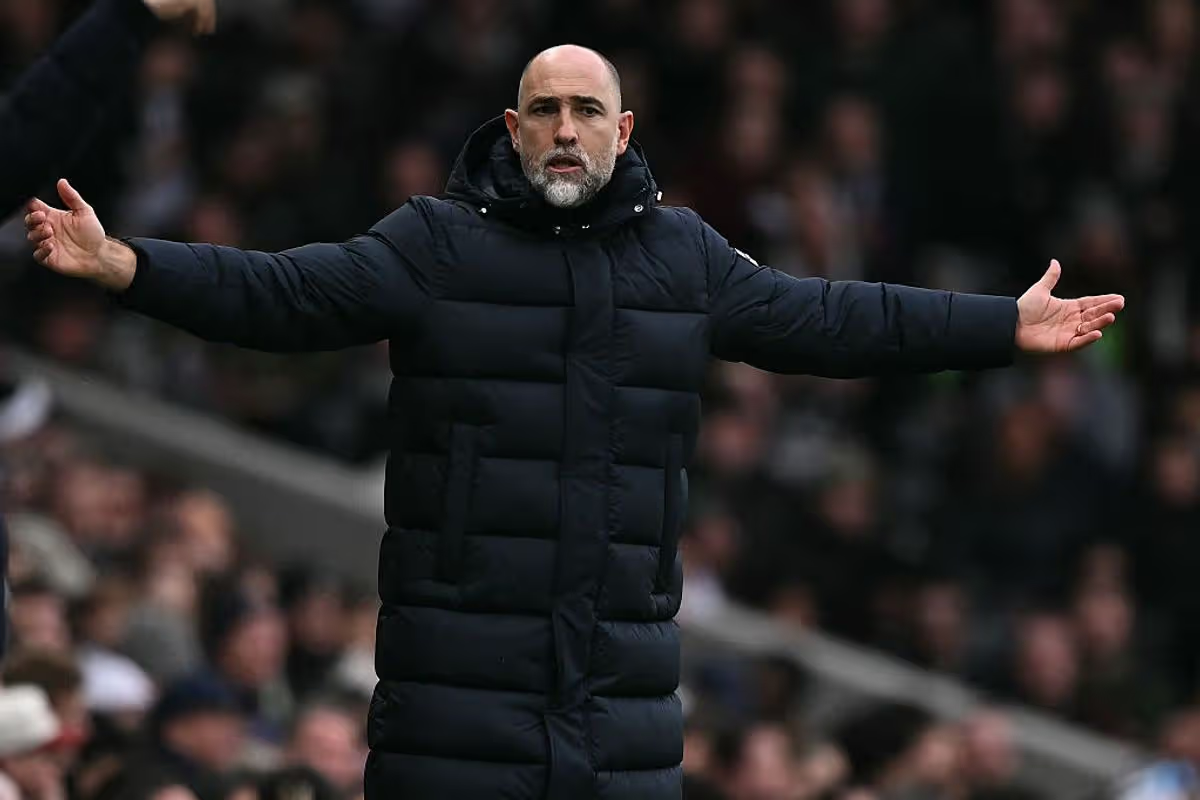
The goal immediately sparked fury from the Tottenham bench. Tudor and his players were adamant that Raul Jimenez had shoved Radu Dragusin in the buildup, gaining an unfair advantage. However, despite a VAR review, the goal stood—a decision that stood in sharp contrast to the previous week when Spurs had a goal disallowed for a similar level of contact against Arsenal.
The inconsistency of the officiating clearly rattled Tudor, who spent a large portion of his press conference focusing on what he perceived as a “cheating” moment that the referees failed to catch.
If the first goal was controversial, the second was a damning indictment of the team’s current defensive state. Alex Iwobi was allowed an incredible amount of time on the edge of the area to pick his spot, eventually curling a shot in off the post.
The lack of closing down from the Tottenham midfield was startling; it was as if the players were spectators at their own defeat. While substitute Richarlison managed to pull a goal back in the 66th minute following some clever work from Mathys Tel and young Archie Gray, it was ultimately a case of too little, too late.
The fact that Richarlison’s header was the team’s only shot on target throughout the entire ninety minutes speaks volumes about their current attacking impotence.
When Tudor finally sat down to address the media, the first question focused on that solitary shot on target. His response was blunt: it simply was not enough. He conceded that Fulham was the better team and deserved the three points, noting that there was nothing “smart” he could say to justify the performance.
His primary focus, however, quickly shifted to the officiating and the opening goal. Tudor argued that nine out of ten people would have seen the shove on Dragusin as an obvious foul. He expressed deep frustration with the lack of consistency in the Premier League, pointing out that the same level of contact is treated differently from one week to the next.
Tudor’s anger regarding the first goal went beyond a simple disagreement with a refereeing decision. He accused the Fulham attacker of “cheating” by focusing on the man rather than the ball. To Tudor, a foul is a foul if it provides a goal-scoring advantage, regardless of how “soft” the contact might seem to some.
He argued that the logic of the game was ignored at Craven Cottage, suggesting that the referee allowed a “strong duel” philosophy to overshadow the basic rules of the sport. This sense of being wronged by the officials seemed to weigh heavily on him, perhaps serving as a distraction from the deeper, more systemic issues within his own squad.
The conversation then turned to the recurring theme of “forgetting the match” and moving on. Tudor was asked how worrying it was to be repeating the same post-match script every week. He admitted that the situation is incredibly complicated and that he had nothing new to offer.
He challenged his players to find their own “inner voices,” urging them to show more personality and a genuine desire to act rather than just react. He used the word “amazing” to describe the current state of affairs, though clearly in a sarcastic and disparaging sense.
He noted that the team is failing in every department: they lack quality in attack, they lack the stamina to run in midfield, and they lack the resilience to suffer and defend at the back.
When asked about the lack of wins and the dwindling confidence in the dressing room, Tudor’s frustration boiled over. When a journalist asked how he intended to change the mental state of the players, he snapped back, “Tell me how we change.”
This moment of vulnerability suggested a manager who is running out of ideas. He also dismissed questions about the tactical system he employed, stating that the formation is the last thing that matters right now. In his view, no amount of tactical tinkering can compensate for a lack of basic running, duel-winning, and effort.
The specter of relegation was also raised, a topic Tudor has consistently tried to avoid. He refused to give a direct answer on whether the club is in real danger of the drop, simply stating that his answer remains the same as in previous weeks.
He clarified his earlier comments about wanting the team to have a “small team mentality,” explaining that he meant it in a positive way focusing on grit, hard work, and the desperation required to survive. However, he lamented that the problems at the club are “much bigger” than just a lack of that specific mindset.
As the press conference drew to a close, there was a small note of optimism regarding the return of senior players like Richarlison, Pedro Porro, and Kevin Danso. Tudor acknowledged that these individuals bring a level of personality and quality that the team desperately needs.
He explained that his biggest struggle is finding a balance; when he plays his most creative players, the team lacks the defensive work rate needed to survive. When he plays the “workers,” they lack the quality to score.
He concluded with a sobering observation: Fulham’s players were not just faster, but they were thinking faster. They were arriving at the ball first because they were predicting the game, while his Tottenham players were “late on everything.”
