The atmosphere at the Tottenham Hotspur Stadium on Sunday evening was heavy with expectation, but by the final whistle, it was replaced by the cold reality of a team in crisis. In what was supposed to be a fresh start under new interim manager Igor Tudor, Tottenham Hotspur instead suffered a humbling 4-1 defeat at the hands of their fiercest rivals, Arsenal.
The loss not only gave the visitors a five-point cushion at the top of the Premier League but also left the hosts languishing in 16th place, peering nervously over their shoulders at the relegation zone.
Standing in the aftermath of the wreckage, Tottenham captain Micky van de Ven provided a remarkably candid assessment of why the game slipped through their fingers. The Dutch defender pointed to a specific tactical gamble that ultimately became the team’s undoing: a high-intensity, man-to-man marking system.
While the strategy was designed to suffocate Arsenal’s playmakers and win the ball high up the pitch, it required a level of precision and synchronicity that this struggling Spurs side simply couldn’t maintain.
The match began with a frantic energy. Arsenal took the lead just after thirty minutes through Eberechi Eze, but the stadium erupted in hope almost immediately. Just 24 seconds after the restart, Randal Kolo Muani stripped the ball from Declan Rice and fired home to level the scores. It was a moment that perfectly illustrated the “reward” side of Tudor’s high-risk strategy.
However, the “risk” side dominated the second half. Arsenal emerged from the tunnel with renewed focus and exploited the gaps left by Tottenham’s aggressive pressing. Viktor Gyokeres struck twice, once just two minutes into the half, while Eze added his second to put the game beyond reach.
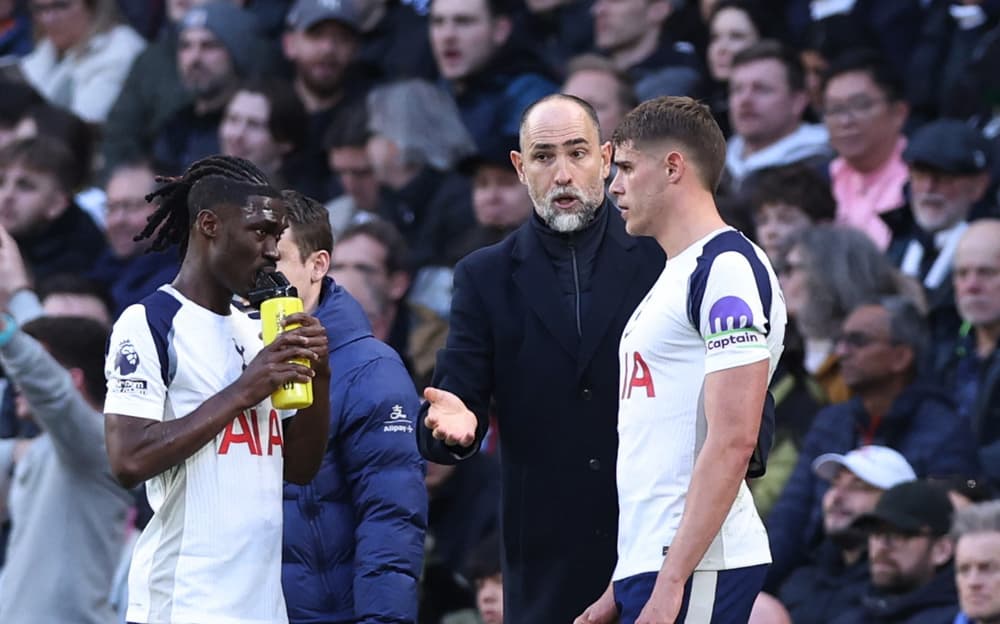
Van de Ven explained that when a team commits to a man-to-man press, there is no margin for error. If even one player is a second too slow or loses their duel, the entire defensive structure collapses, leaving the backline exposed.
This was evident in the opening goal, where Kolo Muani lost track of Eze, and again shortly after halftime when Joao Palhinha was beaten to a loose ball by Gyokeres. “It’s a risk when you go man for man,” Van de Ven admitted to reporters. He noted that while winning the ball high creates immediate attacking options, failing to secure it leaves the team completely open to being picked apart by top-tier opposition.
The statistics for Tottenham are becoming increasingly grim. As we move deeper into February, they remain the only Premier League side without a league victory in 2026. They currently sit only four points above 18th place, a position that feels alien to a club of this stature.
The transition from Thomas Frank to Igor Tudor was meant to provide a “bounce,” but instead, it served as a harsh lesson in the gulf between a title-contending side and one fighting for its top-flight life.
Despite the sobering result, Igor Tudor remains defiant. The Croatian coach acknowledged that Arsenal was the superior side on the day and described the match as a “lesson” for his players. He did not shy away from the magnitude of the challenge, admitting that turning the club’s fortunes around is a “big job.”
However, he maintained a firm belief that Spurs have the quality to avoid the drop. Tudor emphasized that the hard work begins immediately, with a focus on improving footballing quality and mental resilience starting Tuesday morning.
| Tottenham vs Arsenal: Key Match Stats | Tottenham Hotspur | Arsenal FC |
| Final Score | 1 | 4 |
| Goals Scored | Kolo Muani (32′) | Eze (31′, 68′), Gyokeres (47′, 72′) |
| League Position | 16th | 1st |
| Points Above Drop | 4 | N/A |
The road ahead for Tottenham is steep. They are a team that looks low on confidence and tactically confused, caught between the desire to be an aggressive, attacking force and the need to be a compact, defensive unit. As Van de Ven noted, the intention behind the high press is noble, but the execution is currently lacking.
For the fans, the sight of their captain admitting they were “open” and “second best” is a bitter pill to swallow. The coming weeks will reveal whether Tudor can refine this high-risk approach into something more stable, or if the “big risk” will continue to yield “bad results.”
