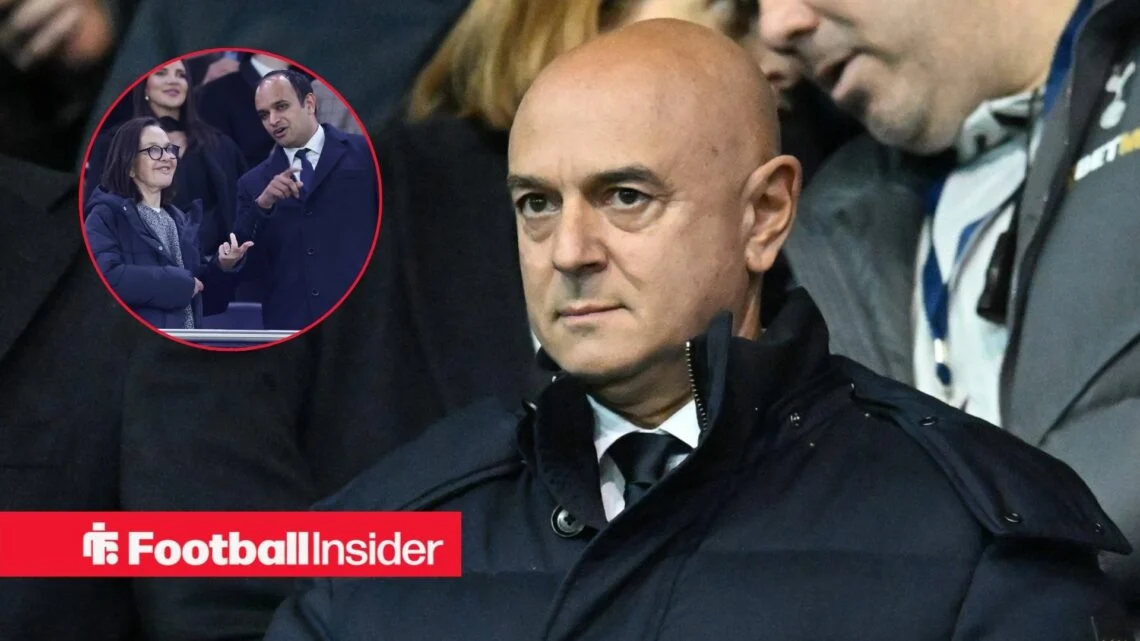
The revolving door of management at Tottenham Hotspur has once again swung shut, leaving many to wonder if the club is stuck in a cycle it simply cannot break. With the recent dismissal of Thomas Frank after only eight months in the hot seat, the North London side finds itself at another crossroads.
While it is easy to blame the person standing on the touchline, a deeper look at the club’s recent history suggests that the issues might be far more ingrained in the institution itself. For years, critics pointed toward Daniel Levy as the primary source of frustration, but his departure earlier this season has proven that the problems at Spurs go much deeper than one individual. The evidence is now mounting that the board, rather than the manager, needs to take a long, hard look in the mirror.
Keith Wyness, a veteran executive who has run major clubs like Everton and Aston Villa, has watched this drama unfold with a sense of “I told you so.” Speaking about the situation, Wyness pointed out that despite the change in leadership at the top, the same old patterns are repeating themselves.
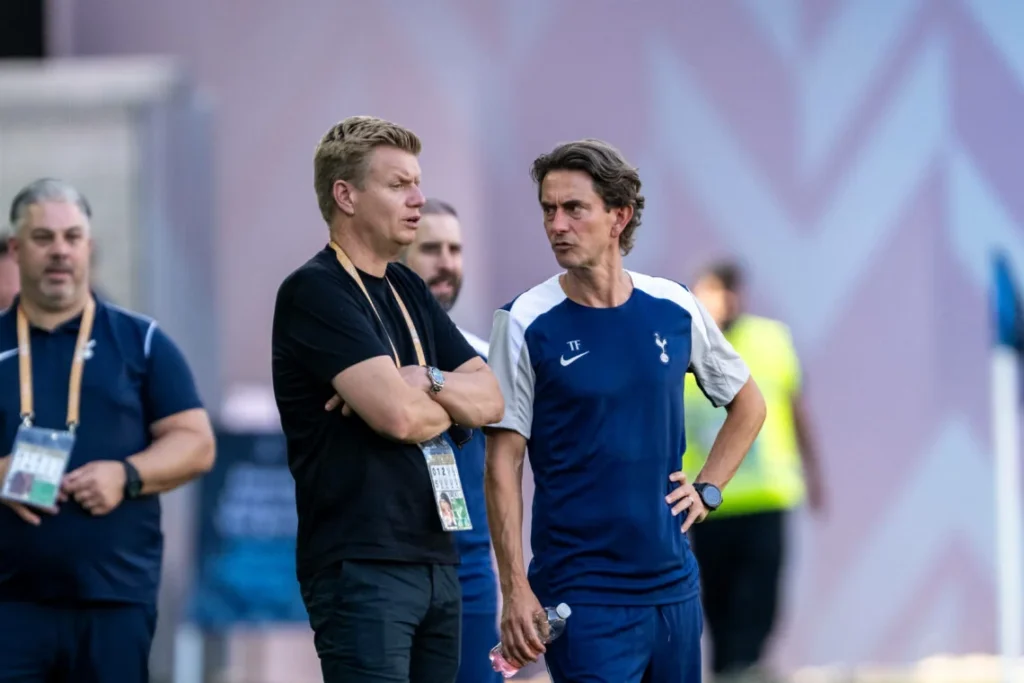
Tottenham is currently languishing just five points above the relegation zone, a terrifying reality for a team that was recently a regular in the Champions League. By making Thomas Frank the “sacrificial lamb” for this season’s failures, the club has once again chosen a quick fix over the difficult work of building a lasting foundation.
One of the most telling observations from Wyness is that the “Daniel Levy era” wasn’t necessarily the problem—it was the symptom of a culture that lacks patience. Even with Levy gone, the club seems unable to provide a manager with the time and security needed to actually change things.
Success in the Premier League isn’t built overnight. It requires a hierarchy that can survive a “wobble” without reaching for the panic button. Wyness points to his own time at Everton as a blueprint for success.
When David Moyes hit a rough patch early in his tenure, the board chose to back him rather than sack him. That decision resulted in over a decade of stability and top-level competitiveness. At Spurs, that kind of loyalty feels like a foreign concept.
The decision to put Igor Tudor in charge until the end of the season is a temporary bandage on a gaping wound. While Tudor may provide a short-term spark, the real challenge lies in what happens this summer. The hunt for a permanent successor is already underway, and the name on everyone’s lips is a familiar one: Mauricio Pochettino.
There is a romantic notion that bringing back the man who led Spurs to a Champions League final in 2019 would solve everything. Pochettino, currently preparing to lead the USA national team into the World Cup, remains a hero to the fans. However, even a manager as talented and beloved as “Poch” would struggle if the leadership above him doesn’t change its ways.
The “deep-rooted issues” mentioned by insiders suggest that the squad is currently in a state of flux, caught between several different tactical identities from past managers. Every time a new coach is brought in, they inherit a group of players signed by three or four different predecessors.
Without a long-term commitment to one person’s vision, the squad becomes a patchwork quilt rather than a cohesive unit. This is why strong leadership at the top is so vital. The hierarchy needs to pick a path and stick to it, even when the results are disappointing in the short term.
As the search for a new permanent manager begins, the pressure on the decision-makers is immense. They cannot afford to get this next appointment wrong. If they hire another high-profile name only to fire them eight months later, they will find it increasingly difficult to attract elite talent.
The job at Tottenham is starting to look like a poisoned chalice a role where you are expected to deliver immediate miracles with a fractured squad and a board that is quick to pull the trigger.
| Managerial Tenure at Spurs | Duration | Key Outcome |
| Mauricio Pochettino | 5 Years | Champions League Final |
| Jose Mourinho | 17 Months | Sacked before Cup Final |
| Antonio Conte | 16 Months | Top 4 finish, then turmoil |
| Thomas Frank | 8 Months | Relegation battle, Sacked |
Ultimately, the fans want to see progress on the pitch, but that progress is impossible without stability off it. The “unrest” that reportedly led to Frank’s exit is often a byproduct of players knowing that the manager is on thin ice. When the hierarchy doesn’t show “proper support,” the dressing room loses its discipline.
To break this cycle, the Lewis family and the rest of the leadership must decide what kind of club they want to be. Do they want to be a club that constantly chases the latest “hot” manager, or do they want to be an institution that builds something meaningful over time?
The departure of Daniel Levy was supposed to be a turning point, a chance for a fresh start. Instead, it has highlighted that the culture of the club is the true obstacle. Whether it’s Pochettino, Michael Carrick, or another candidate who takes the reins this summer, they will need more than just a tactical plan.
They will need a promise and the evidence of that promise in action that they won’t be looking for a new job the moment things get difficult.
